
The best Islamic books are the ones that pull you closer to Allah, root you in authentic knowledge, and stay with you long after the last page. After more than a decade of reading, recommending and writing about Islamic literature, I’ve kept returning to a short list of titles that consistently shape sincere readers — converts, born Muslims, students of knowledge, and busy professionals alike.
This guide lists 15 of the best Islamic books in English, organised into eight themes so you can build a reading path that matches where you are in your journey. Every recommendation is a book I have either studied personally or seen used in serious Islamic study circles. A useful book, as our scholars remind us, is one written sincerely for the sake of Allah — not for prestige or applause.
How to choose your first Islamic book
Most readers ask the same two questions: “Which Islamic book should I read first?” and “How do I tell an authentic book from a weak one?” The honest answer is that the right first book depends on three things — your relationship with the Qur’an, your familiarity with hadith, and the time you can realistically commit each week.
If you are new to Islam or returning after a long pause, start with a clear English Qur’an translation (Pickthall, Saheeh International or the Clear Quran by Mustafa Khattab are all reliable) and pair it with The Sealed Nectar so the verses you read begin to live inside the Prophet’s biography. If you already read the Qur’an regularly, your next leverage point is hadith — the Forty Hadith of Imam an-Nawawi is the universal entry. And if you’ve been Muslim your whole life but want to deepen your worship, jump to a book on purification of the heart.
To check that an Islamic book is authentic before you buy, look for three signals: the author is a recognised scholar or a respected translator (not anonymous), the publisher is established (Darussalam, Kube, Islamic Foundation, Islamic Texts Society, IIIT, Sandala), and every claim about the Prophet ﷺ is cited to Sahih al-Bukhari, Sahih Muslim or another known collection. Avoid anonymously authored PDFs and books whose hadith come without sources — they are the single biggest source of misinformation in English Islamic publishing.
Key takeaways:
- The first three Islamic books every Muslim should own: an accurate Qur’an translation, The Sealed Nectar (Seerah), and the Forty Hadith of Imam an-Nawawi.
- Choose by theme, not by hype — Qur’an & tafsir, hadith, Seerah, spirituality, fiqh of daily life, history, memoir, and prophetic stories all play different roles.
- Authentic Islamic books cite their hadith to known collections (Sahih al-Bukhari, Sahih Muslim, Sunan Abi Dawud, Jami at-Tirmidhi). If a book quotes the Prophet ﷺ without a source, skip it.
- This list deliberately includes women authors and modern voices (Yasmin Mogahed, Hamza Yusuf, Muhammad Asad) alongside classical scholarship.
1. Qur’an translations and tafsir
The Qur’an is the foundation. Every other Islamic book exists to help you understand or live by it. For English readers, you need both a careful translation and a serious tafsir.
1. The Meaning of the Glorious Quran — Muhammad Marmaduke Pickthall

Pickthall, an English convert and classical scholar of Arabic, produced one of the earliest widely-respected English Qur’an translations in 1930. His prose preserves the dignity of the original while remaining readable. Many seminaries still recommend it as a starting point because Pickthall consulted the leading Egyptian scholars of his day before publishing.
Best for: readers who want a literary, reverent translation. Pair with: Saheeh International or The Clear Quran (Mustafa Khattab) for a second voice on difficult verses.
2. Tafsir Ibn Kathir (تفسير ابن كثير)

Imam Ibn Kathir, a 14th-century student of Ibn Taymiyyah, wrote what is now the most widely-used classical tafsir. The English edition published by Darussalam (10 volumes, also available in a single-volume abridgement) explains each verse using other Qur’anic verses, authentic hadith and the explanations of the companions and their successors — exactly the methodology of tafsir bil-ma’thur the early scholars favoured.
Related:

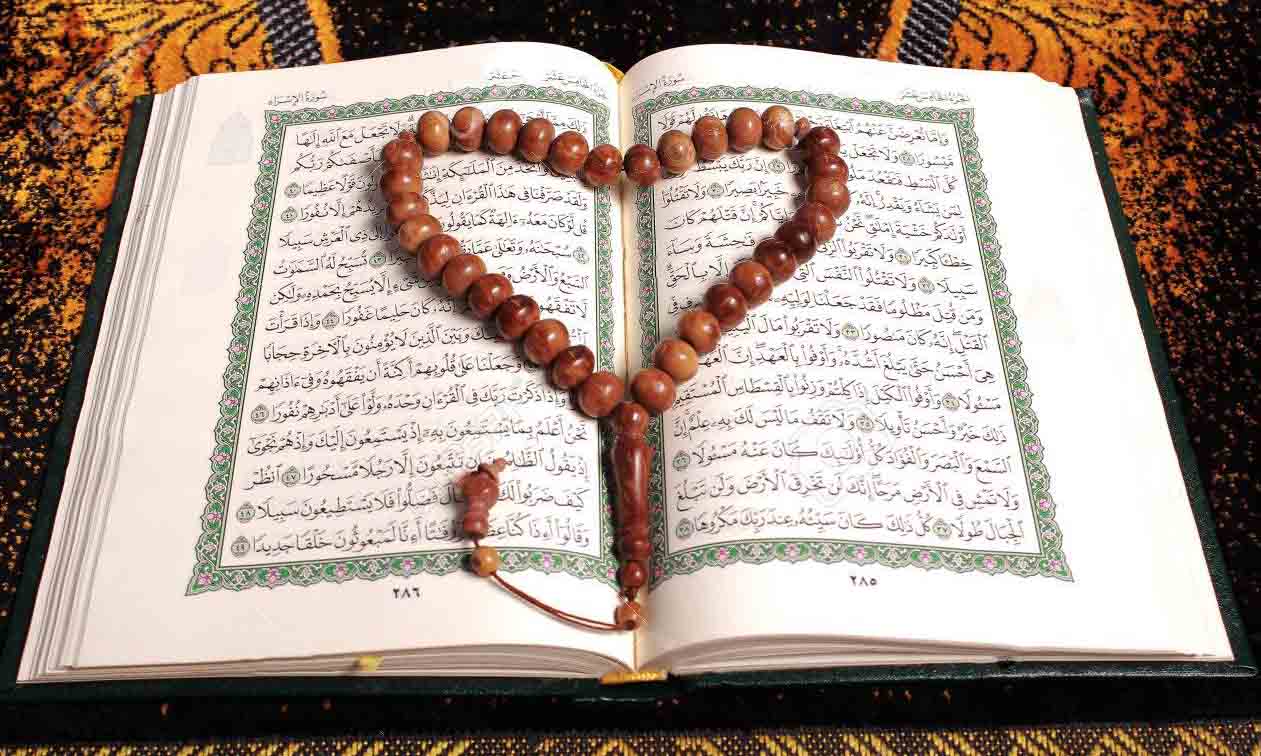

Best for: serious study of the Qur’an alongside a daily reading habit. Begin with Surah Al-Fatiha and the short surahs in Juz Amma, then expand as your reading deepens.
2. Foundational hadith collections
After the Qur’an, the second source of Islamic knowledge is the authentic Sunnah — the recorded sayings and actions of the Prophet Muhammad ﷺ. Three works belong on every Muslim’s shelf.
3. Sahih al-Bukhari and Sahih Muslim
These two collections are known as the Sahihayn — “the two authentic books” — and are the most reliable hadith compilations in Sunni Islam. Imam Muhammad al-Bukhari (d. 256 AH) sifted around 600,000 narrations down to about 7,500 he considered sahih. Imam Muslim ibn al-Hajjaj (d. 261 AH) applied an equally rigorous methodology and arranged his work topically. Together they form the foundation of every later book of fiqh, aqidah and adab.
Both are available in full English translation from Darussalam in multi-volume sets and as single-volume abridgements (Summarized Sahih al-Bukhari is a popular entry point). You do not need to read them cover-to-cover — use the topic index to look up “patience”, “marriage”, “the prayer” or whatever you are studying, and read the relevant chapter.
4. Forty Hadith of Imam an-Nawawi
Imam Yahya ibn Sharaf an-Nawawi (d. 676 AH) compiled 42 short hadith that together summarise the religion. Every serious teacher of Islam recommends this book as the first hadith collection an English reader should memorise. It is short — you can finish it in a single afternoon — yet each hadith opens onto entire chapters of Islamic teaching: “actions are by intentions” (hadith 1), “no harm and no reciprocating harm” (hadith 32), the famous hadith of Jibreel on iman, islam and ihsan.
Look for the edition with Imam Nawawi’s introduction and a brief commentary. Jamaal Zarabozo’s expanded commentary (Al-Basheer, 3 volumes) is the gold standard if you want depth.
5. Riyad as-Salihin (رياض الصالحين) — Imam an-Nawawi

“The Gardens of the Righteous” is Imam Nawawi’s larger compilation — almost 2,000 authentic hadith arranged thematically around character, worship and daily conduct. Where the Forty Hadith gives you the spine, Riyad as-Salihin fills in the body. Chapters cover sincerity, repentance, patience, gratitude, modesty, brotherhood, justice, and how to behave with parents, neighbours and guests.
This is the book to keep on your nightstand and read one chapter at a time, slowly. Within a year, your understanding of Islamic ethics will be transformed.
3. Seerah — the life of the Prophet ﷺ
You cannot follow the Prophet Muhammad ﷺ without knowing him. The Seerah genre is the biography of the Prophet ﷺ — and two books, one classical-sourced and one Western-friendly, give the fullest picture.
6. The Sealed Nectar (الرحيق المختوم) — Safi-ur-Rahman al-Mubarakpuri

Originally written in Arabic, this Seerah won the 1979 Muslim World League prize for the best modern biography of the Prophet ﷺ. Al-Mubarakpuri tells the story chronologically — from pre-Islamic Arabia through the Hijrah, the battles of Badr and Uhud, the conquest of Makkah, and the Farewell Sermon — using only authentic narrations and the most reliable classical sources. The English edition from Darussalam is well-paginated and footnoted; a teenager can finish it in a few weeks.
7. Muhammad: His Life Based on the Earliest Sources — Martin Lings
Martin Lings (Abu Bakr Siraj ad-Din) was a Cambridge-trained Shakespeare scholar who embraced Islam and spent decades teaching at Al-Azhar. His Seerah, drawn directly from Ibn Ishaq, al-Waqidi and Ibn Sa’d, reads like literary biography rather than academic citation — yet every event is traceable to the earliest sources. It won the biography prize from Pakistan in 1983 and Egypt in 1990. Many converts say it was the book that first showed them the Prophet ﷺ as a person, not a figure on a page.
How to pair the two: read The Sealed Nectar for chronological clarity and Lings for emotional and literary depth. Together they form the most balanced Seerah education available in English.
4. Spirituality and purification of the heart
Knowledge without sincerity is heavy, and worship without a softened heart becomes a routine. These two books focus on tazkiyah — the purification of the soul that the Prophet ﷺ called the inner work of religion.
8. Purification of the Heart — Hamza Yusuf
Shaykh Hamza Yusuf’s translation and commentary on Imam al-Mawlud’s classical poem Matharat al-Qulub identifies 25 diseases of the heart — envy, malice, love of the world, pride, arrogance, riya (showing off), false hope — and walks through both the diagnosis and the cure for each one. This is the most-cited modern English book on tazkiyah for a reason: it is rooted in a real classical text, taught in real circles, and written by someone who has spent three decades translating Islam to Western audiences without diluting it.
Best for: readers who feel their worship has become mechanical and want to understand why.
9. Reclaim Your Heart — Yasmin Mogahed
Yasmin Mogahed’s collection of essays became one of the most-shared Islamic books of the last decade, especially among women and young Muslims navigating heartbreak, identity and attachment. The thesis is simple and Qur’anic — when we anchor our hearts to anything other than Allah, that anchor will eventually fail and pull us down with it. Mogahed writes as a psychologist and a Muslim sister, blending verse, hadith and lived experience without ever sacrificing the Islamic foundation.
Best for: anyone going through a hard season — loss, divorce, depression, feeling distant from Allah.
5. Practical Islamic living
Islam is a way of life, and the next two books give you a complete handbook for the daily rulings, family life and adab the religion calls us to.
10. Minhaj ul Muslim (منهاج المسلم) — Abu Bakr Jabir al-Jaza’iri

Subtitled “A Book of Creed, Manners, Character, Acts of Worship and Other Deeds”, Minhaj ul Muslim is exactly what its title says: a single-volume reference that covers aqidah (belief), the five pillars in detail, fiqh of buying and selling, marriage, divorce, inheritance, food and dress, sickness and death. The author was a Madinah-based scholar who taught at the Prophet’s Mosque for decades; the English edition from Darussalam runs about 750 pages.
Best for: the one Islamic reference book you keep in the house and consult whenever a question of “how do I actually do this?” comes up.
11. Blissful Marriage: A Practical Islamic Guide

Written by Ekram and Mohamed Rida Beshir — a husband-and-wife team of Canadian Muslim educators — this is the most practical English book on Islamic marriage I have come across. It treats marriage as a multi-stage relationship that needs preparation, deliberate maintenance and active troubleshooting, and grounds every recommendation in Qur’anic verses and prophetic guidance. The chapters on communication, conflict resolution, and the rights and responsibilities of each spouse are especially useful for engaged couples and newlyweds.
Best for: couples preparing for nikah, or any married Muslim who wants Islamic tools for the long haul.
6. Islamic history and civilisation
12. The Muqaddimah — Ibn Khaldun

Ibn Khaldun (d. 808 AH) wrote The Muqaddimah — “the introduction” to a much longer universal history — as a standalone treatise on how civilisations rise and fall. Six centuries later, modern historians still describe it as the first work of sociology, economics and historiography. For a Muslim reader, what is striking is how Ibn Khaldun’s analysis flows entirely from the Islamic worldview: the rise of asabiyyah (group solidarity), the corrupting effect of luxury, the cycle of dynasties, the relationship between religion and political authority.
Franz Rosenthal’s complete three-volume English translation is the academic gold standard; N. J. Dawood’s Princeton abridgement in a single volume is the entry point most students start with.
7. Memoir and the modern Muslim journey
Some lessons only land through someone else’s story. These two books — one a memoir, one a meditation on family — show Islam lived rather than only described.
13. Loving Our Parents: Stories of Duties and Obligations

The Qur’an pairs the command to worship Allah alone with the command to honour one’s parents in more than one place. This compact book gathers stories from the Companions, the early generations and the contemporary world that show what filial piety actually looks like — financial support, patient speech, prioritising a parent’s comfort over your own preferences, prayer for them after their death. Read it once a year. It rebalances how you treat the two people closest to your Lord’s pleasure.
14. The Road to Mecca — Muhammad Asad

Muhammad Asad — born Leopold Weiss to an Austrian-Jewish family in 1900 — embraced Islam in his twenties, spent years traveling across Arabia, became an adviser to King Abdulaziz, and later drafted the early constitutional framework of Pakistan. The Road to Mecca tells the story of how a European journalist found Islam, told around a single winter night in the Arabian desert. It is one of the great Islamic memoirs of the twentieth century and remains the conversion story most likely to put a non-Muslim reader on a path of serious inquiry.
8. Stories of the Prophets
15. Stories of the Prophets — Hafiz Ibn Kathir

The Qur’an references twenty-five prophets by name but tells most of their stories in fragments scattered across different surahs. Ibn Kathir’s Qisas al-Anbiya brings the full sequence together — Adam, Idris, Nuh, Hud, Salih, Ibrahim, Lut, Isma’il, Ishaq, Ya’qub, Yusuf, Shu’ayb, Ayyub, Musa and Harun, Yunus, Dawud, Sulayman, Ilyas, al-Yasa, Zakariyya, Yahya, ‘Isa, and finally the seal of the Prophets, Muhammad ﷺ. Each chapter weaves the Qur’anic verses, authentic hadith and verified historical context into one continuous narrative.
Best for: family reading. The stories carry both children and adults, and they teach the unity of all prophetic teaching — one message, many messengers.
Where to find authentic Islamic books in English
One of the most common questions I get is where to buy Islamic books online without ending up with a poorly-translated or scholarly-questionable copy. A few reliable starting points:
- Darussalam Publishers — the largest English Islamic publisher; full Sahih al-Bukhari, Sahih Muslim, Tafsir Ibn Kathir, Sealed Nectar, Minhaj ul Muslim, Stories of the Prophets.
- Kube Publishing (UK) — strong on children’s Islamic books and translated classical works.
- Islamic Texts Society — the home of Al-Ghazali’s Ihya translations and many classical Sufi texts.
- Islamic Foundation (Markfield, UK) — long-running publisher of Tafhim al-Qur’an and many seminal English titles.
- Sandala Press / Zaytuna — for Hamza Yusuf’s translations and traditional ulama in the West.
- Local masjid and Islamic centre bookshops — often carry curated reading lists and are happy to point beginners to the right edition.
A note on free PDFs: a lot of pirated Islamic ebooks circulate online, sometimes with translations modified by unknown editors. Wherever possible, buy the print edition or a verified digital copy from the publisher’s own website. Supporting the scholars and translators is part of the adab of reading their work.
Building a lasting Islamic reading routine
Owning 15 great Islamic books on a shelf does nothing on its own. The Muslims I have watched grow most consistently — converts who became teachers, parents who became seekers — followed a few quiet habits.
- Pair every reading session with the Qur’an. Open the mushaf for at least one page before you turn to anything else. The Qur’an is the lens through which the other books make sense.
- Read with intention (niyyah). Begin with bismillah and ask Allah to make the knowledge sincere and beneficial. The reading then becomes worship, not just learning.
- Start short. Forty Hadith of Nawawi, one hadith a day; Riyad as-Salihin, one chapter a week. Long books like Tafsir Ibn Kathir work best when chained to a daily Qur’an reading.
- Join a circle. A weekly halaqa at your masjid will hold you accountable and expose you to teachers who can clarify what you’ve read. Online circles work too, but in-person is better when possible.
- Take notes by hand. A small notebook for each book — verse references, hadith you want to memorise, du’as you want to start using — outlasts any highlighter.
- Re-read. The classical books are not consumed once. Riyad as-Salihin, the Forty Hadith and the Sealed Nectar reward re-reading the way the Qur’an does. The reader changes; the book reveals more.
What is the best Islamic book to read first?
For an English-speaking Muslim or new convert, the best Islamic book to read first is the Qur’an in a reliable English translation — Pickthall, Saheeh International or The Clear Quran (Mustafa Khattab) are all trustworthy. After the Qur’an, the most useful second book is The Sealed Nectar (a biography of the Prophet Muhammad ﷺ), and the most useful third is the Forty Hadith of Imam an-Nawawi. These three together give you the Qur’an, the life of the Prophet, and the foundations of authentic Sunnah in roughly the order the early scholars recommended.
What are the most important books in Islam?
The most important Islamic books are, in order: the Qur’an (the literal word of Allah and the source of all Islamic teaching), Sahih al-Bukhari and Sahih Muslim (the two most authentic collections of the Prophet’s ﷺ sayings), and the major Sunan — Sunan Abi Dawud, Jami at-Tirmidhi, Sunan an-Nasa’i and Sunan Ibn Majah — known collectively as the Kutub al-Sittah or six major books of hadith. After these primary sources, every other Islamic book draws its authority from how faithfully it transmits and explains them.
What Islamic books should new Muslims and reverts read?
For new Muslims, start with a clear English Qur’an translation and a short introduction to Islam such as I.A. Ibrahim’s A Brief Illustrated Guide to Understanding Islam or a similar primer. Then move to The Sealed Nectar for the life of the Prophet ﷺ and the Forty Hadith of Imam an-Nawawi for foundational teachings. Muhammad Asad’s The Road to Mecca is one of the most powerful Muslim conversion memoirs and helps frame your own journey. Avoid sectarian or sensational books at the start — anchor yourself in the Qur’an, the Sahihayn, and a Seerah from a recognised classical source.
What is the best biography of Prophet Muhammad ﷺ?
The two best English biographies of the Prophet Muhammad ﷺ are The Sealed Nectar by Safi-ur-Rahman al-Mubarakpuri (winner of the 1979 Muslim World League prize) and Muhammad: His Life Based on the Earliest Sources by Martin Lings. The Sealed Nectar is chronological and source-rich; Lings’s biography is more literary and especially recommended for non-Muslims and converts because it traces every event back to the earliest classical sources (Ibn Ishaq, al-Waqidi, Ibn Sa’d) while reading like serious narrative biography. Reading both gives the most balanced picture of the Prophet’s life.
Are there well-known Islamic books written by women?
Yes. Yasmin Mogahed’s Reclaim Your Heart is one of the most-shared modern Islamic books on spirituality and the heart. A. Helwa’s Secrets of Divine Love and Carla Power’s If the Oceans Were Ink are both widely read. Classical and historical women scholars also produced important works — Aisha bint Abi Bakr (radi Allahu anha) transmitted thousands of hadith and was the first authority on the Prophet’s family life; Karima al-Marwaziyyah taught Sahih al-Bukhari in Makkah and counted some of the greatest male scholars among her students. Including women’s voices in your Islamic reading is part of receiving the full tradition.
How many books are there in Islam?
Muslims believe Allah revealed four named books and a set of Scrolls (Suhuf) to specific prophets: the Suhuf of Ibrahim, the Tawrat (Torah) to Musa, the Zabur (Psalms) to Dawud, the Injeel (Gospel) to ‘Isa, and the Qur’an to Muhammad ﷺ. The Qur’an is the final revelation and the only one that has been preserved word-for-word in its original Arabic. Beyond these revealed books, Islamic knowledge is preserved in thousands of scholarly works — hadith collections, tafsir, fiqh, Seerah, aqidah and tasawwuf — written by scholars across fourteen centuries.
Start your reading list this week
If today is the day you start, pick just three books from this list — one from the Qur’an section, one Seerah, and one hadith collection — and put them somewhere visible. Open the first one tonight after Isha. The Prophet Muhammad ﷺ said the best of deeds are those done consistently, even if small. The same is true of Islamic reading: a single page each night for a year will change your understanding of the religion in ways a binge-read of ten books in one weekend never will.
May Allah make these books a means of guidance for you, and may He bless your time and your understanding. Ameen.