


By Effat Saleh · Founder of islamtics
Sources: Sahih Muslim 234, Sunan an-Nasa’i 148, Sunan al-Tirmidhi 55, Talkhis al-Habir (Ibn Hajar) ·
Allah commands believers to perform wudu before prayer: “O you who have believed, when you rise to perform prayer, wash your faces and your forearms to the elbows and wipe over your heads and wash your feet to the ankles” (Quran 5:6). When that physical purification ends, the Prophet (peace be upon him) taught a short supplication that, in a single sentence, opens the gates of Paradise. This page covers exactly what that dua is, where it comes from, what every word means, and which popular addition scholars have flagged as weak.
Key takeaways:
- The authentic dua after wudu is the shahada, recorded in Sahih Muslim 234 and Sunan an-Nasa’i 148.
- Whoever recites it after a complete wudu has all eight gates of Paradise opened for him to enter from whichever he wishes.
- Saying it is sunnah across the four schools, not a condition for the validity of wudu or salah.
- The popular addition “Allahumma’j’alni minat-tawwabin…” was graded weak by Ibn Hajar (Talkhis al-Habir), though some later scholars accepted it.
- Sitting briefly to recite it, then praying two rak’at, brings the reward of Bilal’s footsteps in Paradise (Sahih al-Bukhari 1149).
Beyond the words themselves, this guide breaks down each phrase of the shahada, explains what “eight gates of Paradise” actually means, summarises the four madhhab positions on its ruling, and shows you the linked sunnah of praying two rak’at (tahiyyat al-wudu) right after. You will also find the short dua to say before wudu and the right etiquette for when you forget to say either one.
Table of Contents
The Dua After Wudu: Arabic, Transliteration & Meaning
Once you finish washing the feet and ending wudu, the established Prophetic supplication is the Shahada: a clear declaration that Allah is One with no partner, and that Muhammad is His servant and messenger. The Prophet ﷺ said that anyone who completes their wudu well and then recites these words will have the eight gates of Paradise opened for him, to enter from whichever he chooses (Sahih Muslim 234).

أَشْهَدُ أَنْ لَا إِلَهَ إلَّا اللهُ وَحْدَهُ لَا شَرِيكَ لَهُ، وَأَشْهَدُ أَنَّ مُحَمَّداً عَبْدُهُ وَرَسُولُهُ
Transliteration: Ashhadu an la ilaha illallahu wahdahu la sharika lahu, wa ashhadu anna Muhammadan ‘abduhu wa rasuluhu.
Meaning: I bear witness that there is no god but Allah, alone, with no partner; and I bear witness that Muhammad is His servant and His Messenger.
Hadith Evidence for the Dua After Wudu
The dua is recorded in three of the most relied-upon hadith collections, and the wording is authenticated through different chains. The clearest narration comes from ‘Umar ibn al-Khattab (may Allah be pleased with him) and is graded Sahih by the major hadith scholars:
- Sahih Muslim 234 — the Prophet ﷺ said: “There is none of you who performs wudu, doing it well, then says: ‘I bear witness that there is no god but Allah alone, with no partner, and that Muhammad is His servant and Messenger,’ except that the eight gates of Paradise are opened for him, and he may enter from whichever of them he wishes.”
- Sunan an-Nasa’i 148 — narrates the same wording from ‘Uqba ibn ‘Amir; graded Sahih by Shaykh al-Albani.
- Sunan al-Tirmidhi 55 — Tirmidhi records the same hadith and adds the wording “Allahumma’j’alni min al-tawwabin…” at the end; the addition is graded weak, see the Tawwabin Addition section below for the full discussion.
The hadith was also reported by Abu Dawud (170), Ibn Majah (470), and Ahmad in his Musnad. The strength of these multiple chains is why every classical fiqh manual lists the shahada as the established (thabit) dua after wudu.
Related:


Word-by-Word Meaning of the Shahada
Reciting words you do not understand still earns reward, but understanding them turns a habit into worship. Here is what each phrase of the shahada actually says:
- Ashhadu (أَشْهَدُ) — “I bear witness.” Not just “I say” or “I believe”: it is a legal-grade testimony, with the heart confirming what the tongue declares.
- An la ilaha illallah (أَنْ لَا إِلَهَ إلَّا اللهُ) — “that there is no god but Allah.” The negation (la ilaha) cancels every false object of worship; the affirmation (illallah) reserves worship for Allah alone.
- Wahdahu (وَحْدَهُ) — “Alone.” Emphasises Allah’s absolute singularity in being worshipped.
- La sharika lahu (لَا شَرِيكَ لَهُ) — “with no partner for Him.” Closes every door to associating any creature with Allah.
- Wa ashhadu anna Muhammadan (وَأَشْهَدُ أَنَّ مُحَمَّداً) — “and I bear witness that Muhammad ﷺ.”
- ‘Abduhu (عَبْدُهُ) — “is His servant.” Placed before “Messenger” to stop any exaggeration: the Prophet is a created servant, not a divinity.
- Wa rasuluhu (وَرَسُولُهُ) — “and His Messenger.” Confirms that what he conveyed from Allah is true and binding.
The following video walks through the shahada word by word for anyone learning the pronunciation:
Virtues: The Eight Gates of Paradise
The reward attached to this dua is one of the most generous in the Sunnah. The Prophet ﷺ promised that all eight gates of Paradise are opened for whoever performs wudu well and then says it, and that the reciter may enter from whichever gate he likes (Sahih Muslim 234). Each gate is reserved for a particular kind of worshipper, for instance the Gate of Prayer for those who pray frequently, the Gate of Charity for the generous, the Gate of Jihad, the Gate of Rayyan for those who fast (Sahih al-Bukhari 1896). For a deeper look at each one, see our guide to the 8 Gates of Jannah in Islam.
Scholars explain that the literal opening of every gate is a reality on the Day of Judgement, not a metaphor. Imam al-Nawawi (in his commentary on Sahih Muslim) notes that this is a tremendous honour and an indicator of the elevated status Allah grants to those who combine outward purity (wudu) with inner tawhid (the shahada). The action takes seconds. The reward never expires.
Is It Sunnah or Obligatory?
Saying the dua after wudu is a confirmed sunnah (recommended practice), not wajib (obligatory). This is the agreed position across the four Sunni schools of jurisprudence (Hanafi, Maliki, Shafi’i, Hanbali). If you complete your wudu and forget the dua, your wudu is still valid and any prayer you offer with it is accepted. You miss the reward of the shahada itself, but you have not committed a sin and do not need to repeat the wudu.
That said, the language of the hadith is striking: the Prophet ﷺ did not say “it is preferable” but described a specific reward (eight gates) for a specific action (well-performed wudu + the shahada). Treating it as a routine ten-second practice, paired with every wudu, is a small habit that compounds into one of the easiest acts of worship in daily life.
When and How to Recite It
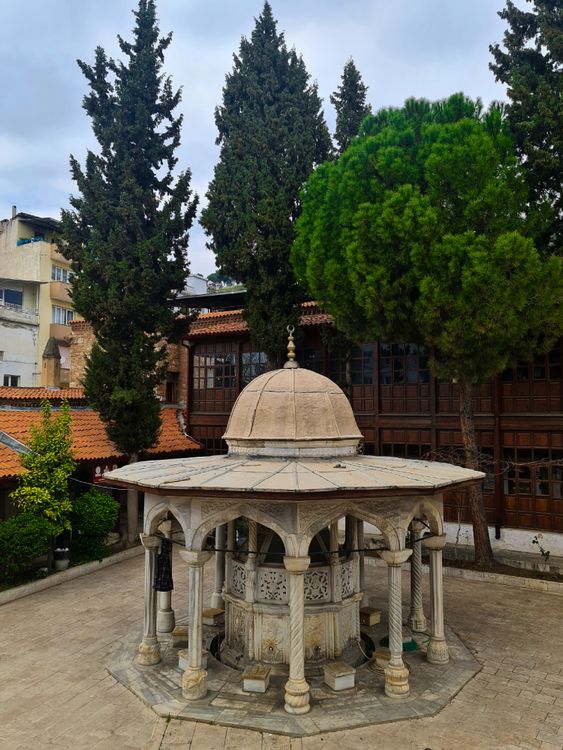
- Timing: right after the final act of wudu (washing the feet up to the ankles), before you stand up to leave.
- Facing the qibla: recommended but not required. The Prophet ﷺ did not condition the dua on facing the qibla.
- Aloud or silent: either is fine. Quiet recitation is the default; saying it audibly to teach a child or learner is also good.
- Hands raised: not part of this dua. The shahada after wudu is recited normally, without raising the hands.
- Wetness on the limbs: the hadith says “performs wudu and does it well, then says…”, so reciting it while the water is still on the limbs is the strongest form. If you have already dried off, recite it anyway — the reward is tied to the saying, not the moisture.
- State of dress: the area you are in must be clean; loose clothing is fine. You do not need to be in salah clothes.
If you usually rush off after wudu to pray salah or get back to work, build a five-second pause into the routine. Hand on the tap turned off, face the qibla if it is convenient, recite the shahada, then move on.
The “Tawwabin” Addition: Is It Authentic?


Many books and apps add the following supplication after the shahada:
اللَّهُمَّ اجْعَلْنِي مِنَ التَّوَّابِينَ وَاجْعَلْنِي مِنَ الْمُتَطَهِّرِينَ
Transliteration: Allahumma’j’alni minat-tawwabina waj’alni minal-mutatahhirin.
Meaning: O Allah, make me among those who turn to You in repentance and make me among those who purify themselves.
This addition is reported in Sunan al-Tirmidhi 55, but the chain that contains it has been graded weak (daif) by leading hadith scholars. Ibn Hajar al-Asqalani in Talkhis al-Habir declared the wording “Allahumma’j’alni minat-tawwabin…” weak, and Imam al-Nawawi noted that the strongest narrations of the hadith stop at the shahada. Shaykh al-Albani reached the same conclusion in his works on Tirmidhi‘s collection.
Some later scholars (such as Ibn al-Salah) accepted the addition because it has multiple supporting reports and contains no doctrinally objectionable content. The practical position most students of knowledge follow today is: focus on the shahada, which is established beyond doubt; reciting the tawwabin wording is permissible as a general dua any time, but it should not be treated as a confirmed Prophetic dua after wudu specifically. For day-to-day repentance, the established short formula is Astaghfirullah wa atubu ilaih.
Two Rak’at After Wudu (Tahiyyat al-Wudu)
The Prophet ﷺ paired the dua after wudu with another linked sunnah: praying two voluntary rak’at, called tahiyyat al-wudu (the greeting of wudu). In Sahih al-Bukhari 1149, the Prophet asked Bilal (may Allah be pleased with him) about an action that had earned him the sound of his footsteps preceding the Prophet into Paradise. Bilal replied that whenever he made wudu, by day or night, he prayed two rak’at with it.
If your schedule allows, the full optimal sequence is:
- Begin wudu with bismillah.
- Complete each step of wudu correctly.
- Recite the shahada (the dua after wudu).
- Pray two rak’at of tahiyyat al-wudu with full attention, asking Allah for forgiveness in the sujood.
The two rak’at are not obligatory and not tied to any specific time outside the forbidden prayer windows (sunrise, zawal, sunset). Done consistently, they connect every wudu to direct conversation with Allah.
Dua Before Wudu
Wudu opens with the intention to perform it for the sake of Allah and the simple act of saying Bismillah. The Prophet ﷺ said: “There is no wudu for the one who does not mention the name of Allah over it” (recorded by Abu Dawud and Ibn Majah; the chain is debated, but the meaning is acted upon as a sunnah by all four schools).

بِسْمِ اللهِ
Meaning: In the name of Allah.
No special formula is required before wudu beyond bismillah with sincere intention. If you forget to say it at the start and only remember partway, say it then; the wudu remains valid.
Common Mistakes & Forgetting the Dua
- Reciting only the weak addition — many people memorise the tawwabin wording and skip the shahada. Reverse it: the shahada is the established dua; the addition is optional.
- Treating it as a condition of wudu — your wudu is complete the moment the last limb is washed, whether or not you recite the dua. Praying salah without saying the dua is fine.
- Saying it before the wudu is complete — the hadith specifies “after performing wudu well.” Recite it when the last step ends.
- Forgetting it — there is no make-up. If you remember an hour later, you cannot retroactively claim the reward; just make a habit of it for the next wudu.
- Confusing it with the dua before salah — the dua after wudu and the opening dua of salah (thana / istiftah) are separate. The shahada is recited standing or sitting after wudu; the salah opening dua is recited in the prayer itself, before Al-Fatihah.
- Adding fabricated wordings — some folk traditions add long supplications about Paradise, marriage, or rizq specifically to wudu. None of those are authentic. Stick to the shahada.
Tying the dua to a physical cue, such as turning off the tap or stepping away from the sink, makes it almost automatic within a week. After that, the seconds it takes to say ashhadu an la ilaha illallah… are some of the highest-return moments in your day.
Frequently Asked Questions
What is the dua after wudu in English?
The dua after wudu, translated, is: “I bear witness that there is no god but Allah, alone, with no partner, and I bear witness that Muhammad is His servant and His Messenger.” The Arabic wording (Ashhadu an la ilaha illallahu wahdahu la sharika lahu, wa ashhadu anna Muhammadan abduhu wa rasuluhu) is recorded in Sahih Muslim 234 and is the established Prophetic supplication after completing wudu.
Is it necessary to say a dua after wudu?
No, it is not obligatory. Reciting the dua after wudu is a confirmed sunnah across all four schools of fiqh, meaning it is highly recommended but not a condition for the validity of wudu or salah. If you finish wudu and forget the dua, you have not committed a sin and you do not need to repeat the wudu. You simply miss the specific reward of having the eight gates of Paradise opened (Sahih Muslim 234).
What happens if I forget the dua after wudu? Is my salah valid?
Your wudu and any salah you offer with it remain fully valid. There is no make-up (qada) for a missed sunnah dua, and you do not earn a sin by forgetting it. If you remember while still at the sink, recite it before leaving. If you only remember later, simply make a habit of saying it next time. The reward attached to the dua is for the act of saying it; missing the saying does not invalidate anything.
Can I say the dua after wudu in English instead of Arabic?
The reward described in the hadith (Sahih Muslim 234) is tied to the Arabic wording the Prophet ﷺ taught. Saying it in Arabic, even if pronunciation is imperfect, is what is asked for. Read or recite the English translation alongside it so you understand what you are saying, but the actual dua should be in Arabic. Memorising the 12 short words of the shahada takes most learners a few days.
Is the “Allahumma’j’alni minat-tawwabin” addition authentic?
The addition is recorded in Sunan al-Tirmidhi 55, but the chain carrying that wording was graded weak (daif) by Ibn Hajar al-Asqalani in Talkhis al-Habir, and Imam al-Nawawi noted that the strongest narrations stop at the shahada. Some scholars accepted it on the basis of supporting reports, but the safer practice is to focus on the established shahada and treat the tawwabin wording as a general permissible dua, not a confirmed sunnah specifically after wudu.
Is there a dua to say during wudu, between the steps?
There is no authentic dua reported for between the steps of wudu (such as while washing the face or the arms). The narrations that mention specific supplications for each limb were graded weak or fabricated by classical hadith scholars including Ibn al-Salah and al-Nawawi. The established Prophetic practice is: say bismillah at the start, complete the steps in order, then recite the shahada at the end. Doing more than this is innovation, not extra reward.
Memorise the shahada once and pair it with every wudu. A few seconds, five times a day on average, and the gates of Paradise stand open for you to enter from whichever you wish, by the permission of Allah.


