

What the Quran Says (Surah At-Tawbah 9:36)
The foundational text for the sacred months sits in Surah At-Tawbah, verse 36 — where Allah declares that out of the twelve lunar months He created, four are inviolable. The wording is decisive: “minhā arba’atun ḥurum” — “of which four are sacred.” The verse anchors the sanctity in creation itself, not in tribal custom or later legislation.
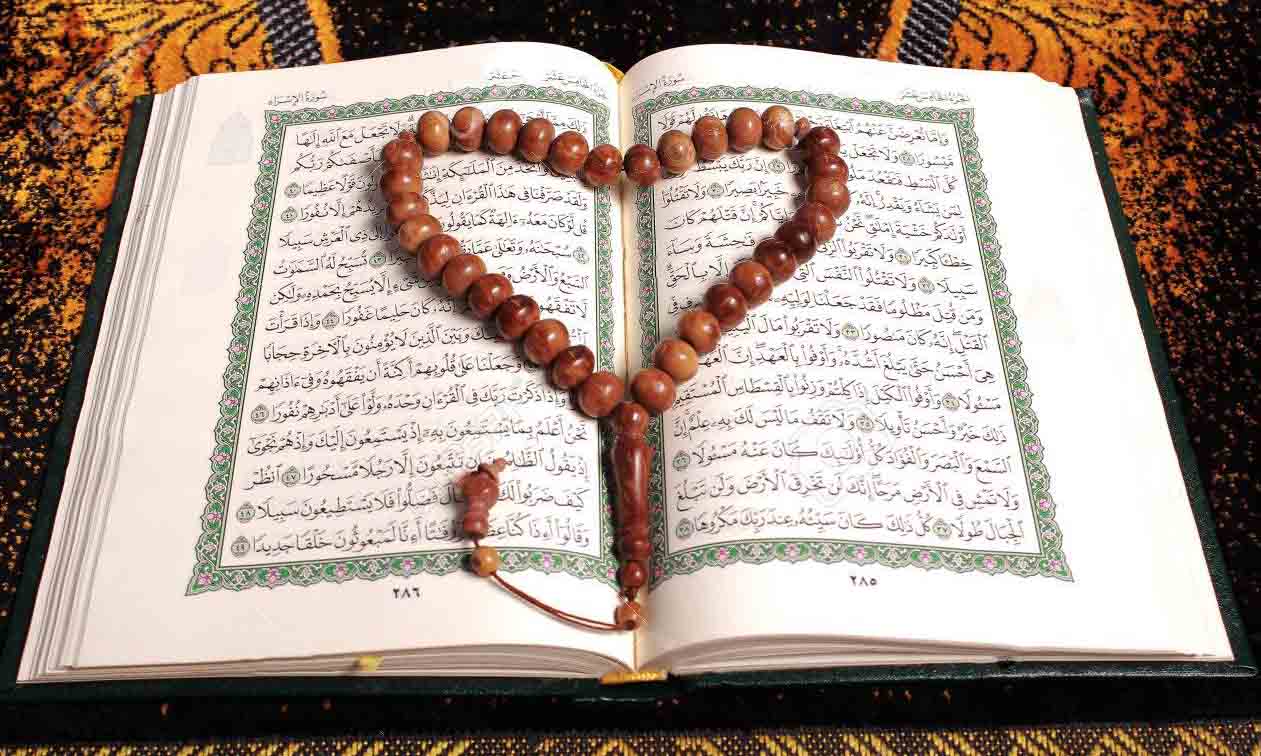
إِنَّ عِدَّةَ ٱلشُّهُورِ عِندَ ٱللَّهِ ٱثۡنَا عَشَرَ شَهۡرٗا فِي كِتَٰبِ ٱللَّهِ يَوۡمَ خَلَقَ ٱلسَّمَٰوَٰتِ وَٱلۡأَرۡضَ مِنۡهَآ أَرۡبَعَةٌ حُرُمٞۚ ذَٰلِكَ ٱلدِّينُ ٱلۡقَيِّمُۚ فَلَا تَظۡلِمُواْ فِيهِنَّ أَنفُسَكُمۡ
“Indeed, the number of months ordained by Allah is twelve — in the Record of Allah since the day He created the heavens and the earth — of which four are sacred. That is the upright religion, so do not wrong yourselves during them.”
Quran 9:36 (Surah At-Tawbah, Sahih International)
The very next verse, Quran 9:37, condemns a practice the pre-Islamic Arabs invented called an-nasī’ — the deliberate “postponement” of a sacred month so the consecutive trio could be reshuffled to suit raiding seasons or revenge campaigns. Allah calls this practice “an addition of disbelief” by which “those who disbelieve are misled.” The pairing matters: 9:36 establishes the months, and 9:37 forbids tampering with them. Together they fix the four sacred months as a permanent, divinely-set feature of the calendar — not a flexible cultural overlay.

Key takeaways:
- The four sacred months are Dhul Qa’dah, Dhul Hijjah, Muharram, and Rajab — named by the Prophet ﷺ in Sahih al-Bukhari 3197.
- Three are consecutive (Dhul Qa’dah → Dhul Hijjah → Muharram); Rajab is the standalone 7th month, called Rajab al-Fard.
- Allah declares them inviolable in Quran 9:36; tampering with them (an-nasī’) is condemned in 9:37.
- Deeds in these months are heavier in quality — not multiplied arithmetically — per Shaykh Ibn Uthaymin citing Quran 6:160.
- Initiating aggression is forbidden; hunting outside the Haram is not forbidden — a common misconception.
The Farewell Sermon Hadith (Sahih al-Bukhari 3197)
Quran 9:36 named four months as sacred; the Prophet ﷺ identified which four in his Farewell Sermon. The chain runs through Abu Bakra (raḍiyallāhu ‘anhu), and the hadith is recorded twice in Sahih al-Bukhari — at hadith 3197 in the Book of the Beginning of Creation, and again at 4662 in the tafsir of this very verse. Both wordings appear in Sahih Muslim as well (no. 1679). It is the canonical reference every classical commentator uses.
الزَّمَانُ قَدِ اسْتَدَارَ كَهَيْئَتِهِ يَوْمَ خَلَقَ السَّمَوَاتِ وَالأَرْضَ، السَّنَةُ اثْنَا عَشَرَ شَهْرًا، مِنْهَا أَرْبَعَةٌ حُرُمٌ، ثَلاَثَةٌ مُتَوَالِيَاتٌ: ذُو الْقَعْدَةِ وَذُو الْحِجَّةِ وَالْمُحَرَّمُ، وَرَجَبُ مُضَرَ الَّذِي بَيْنَ جُمَادَى وَشَعْبَانَ
“The division of time has turned to its original form which was current when Allah created the Heavens and the Earths. The year is of twelve months, out of which four months are sacred: three are in succession — Dhul Qa’dah, Dhul Hijjah, and Muharram — and the fourth is Rajab of Mudar, which comes between Jumada and Sha’ban.”
Sahih al-Bukhari 3197 (also 4662); Sahih Muslim 1679 — narrated by Abu Bakra
The phrase “Rajab of Mudar” carries a quiet historical correction. In the late jāhiliyyah, Arab tribes had drifted the actual position of Rajab — the tribe of Rabi’ah was observing it in a different month than the tribe of Mudar. By specifying “Rajab of Mudar,” the Prophet ﷺ confirmed which calendar was correct: the 7th month between Jumada and Sha’ban, exactly where the Hijri calendar places it today. Imam al-Tabari unpacks this dispute at length in his tafsir of Quran 9:36.

The Four Months in Order
Walking through the Hijri calendar in sequence makes the geometry of the sacred months clear. The year opens with Muharram (1st), runs through six “regular” months, hits Rajab as a standalone sacred month in the middle (7th), and closes with the consecutive trio of Dhul Qa’dah (11th), Dhul Hijjah (12th), and Muharram of the following year. Three of the four cluster around the Hajj season; Rajab sits across the year from them to balance the calendar.
Related:


Muharram (1st)
Muharram opens the Hijri year and closes the consecutive sacred trio. The Prophet ﷺ called it shahrullāh al-muḥarram — “Allah’s sacred month, al-Muharram” — and ranked its voluntary fasting as the best after Ramadan (Sahih Muslim 1163). It contains the Day of Ashura on the 10th, when Allah saved Musa (peace be upon him) and the Children of Israel from Pharaoh. The Prophet ﷺ fasted Ashura and instructed Muslims to add a day before or after (the 9th or 11th) to differ from the Jews who fasted it alone.
See our guide to the 1st of Muharram for the dua and historical context that mark the Islamic New Year.
Rajab (7th) — The Standalone Sacred Month
Rajab is the only sacred month that does not sit in the Hajj cluster. Classical scholars call it Rajab al-Fard (“the Solitary Rajab”) for this reason. Its sanctity is fully established by Quran 9:36 and Bukhari 3197 — but a great deal of folklore has accumulated around it over the centuries. Many of the rituals popularly associated with Rajab — Salat al-Raghaib on the first Friday night, fasting all 30 days as a special obligation, or the assigned significance of the 27th — rest on weak or fabricated narrations. Ibn Taymiyyah and Ibn Rajab al-Hanbali both wrote treatises specifically refuting these innovations.
What is authentic for Rajab? General virtuous deeds — voluntary prayer, voluntary fasting on Mondays and Thursdays, charity, dhikr — all of which were the Prophet’s ﷺ practice year-round. A short transmitted supplication, “Allahumma barik lana fi Rajab wa Sha’ban”, is reported as something the Prophet ﷺ said when he saw the crescent of Rajab, though scholars differ on its grading.
Dhul Qa’dah (11th)
Dhul Qa’dah opens the consecutive trio. Its name comes from the root qa’ada (“to sit, to refrain”) — the Arabs would “sit out” from fighting and travel in this month in preparation for Hajj. The Prophet ﷺ performed all four of his lifetime ‘umrahs in Dhul Qa’dah, and most scholars therefore consider ‘umrah in this month especially virtuous because of that prophetic pattern. The Treaty of Hudaybiyyah (6 AH) and the ‘Umrat al-Qadā’ (7 AH) both fell in Dhul Qa’dah, anchoring its sanctity in the Sīrah itself.
Dhul Hijjah (12th)
Dhul Hijjah is the month of Hajj itself — the fifth pillar of Islam — and contains some of the most weighted days of the entire year. Ibn Abbas (raḍiyallāhu ‘anhumā) narrated that the Prophet ﷺ said, “There are no days in which righteous deeds are more beloved to Allah than these ten days,” referring to the first ten days of Dhul Hijjah (Sahih al-Bukhari). The Day of Arafah falls on the 9th, Eid al-Adha and the Day of Nahr on the 10th, and the Days of Tashreeq (11th–13th) close out the sacrificial period.

Why Three Consecutive and One Alone?
The geometry of the sacred months is not arbitrary — it solves a logistical problem the Arabs of the Hijaz had been wrestling with for centuries. Imam Ibn Kathir, in his tafsir of Quran 9:36, explains that the three consecutive months wrap the Hajj season: Dhul Qa’dah is the safe travel window to Makkah, Dhul Hijjah is the rites themselves, and Muharram is the safe return window home. Tribes from Yemen, the Levant, and the Najd could undertake the journey without fearing ambush.
Rajab plays the same protective role for the mid-year ‘umrah. A standalone sacred month roughly six months away from Dhul Hijjah let distant Arabs visit the Sacred House at a separate point in the year — again without intertribal raids interrupting the journey. Ibn Kathir notes that this dual cluster — three for the Hajj season, one for the lesser pilgrimage — is part of the divine wisdom in fixing the calendar this way “from the day He created the heavens and the earth.”
The Prophet’s ﷺ choice of phrase, “Rajab of Mudar, which comes between Jumada and Sha’ban,” was also a calendar correction. The tribe of Rabi’ah had been counting Rajab a month earlier; the tribe of Mudar had it right. By naming the Mudar reckoning, the Prophet ﷺ resolved a tribal calendar dispute that had distorted the very practice of sanctifying the month — and pinned Rajab firmly to its current position as the 7th lunar month.
Multiplied in Quality, Not Quantity
Here is where most popular articles on the sacred months slip into imprecision. The Quranic phrase “fa-lā taẓlimū fīhinna anfusakum” — “so do not wrong yourselves during them” — has been understood by the salaf as a warning that sin in these months is graver than sin in other months. But “graver” is not the same as “literally multiplied in count.”
Ibn Abbas (raḍiyallāhu ‘anhumā) reported that Allah “made sinning in them greater, in addition to multiplying rewards of righteous deeds during them.” Qatadah ibn Diʿāmah (d. 117 AH), one of the great Successors and a mufassir of Basra, added: “Injustice during the sacred months is worse and graver than injustice in other months. Verily, injustice is always wrong, but Allah makes things graver than others as He wills.” Both quotations come from Ibn Kathir’s tafsir of Quran 9:36.
The contemporary scholar Shaykh Muhammad ibn Salih al-Uthaymin (d. 1421 AH) clarified the mechanism. The multiplication, he taught, is in the quality — the weight, the severity, the accounting before Allah — not in the arithmetic count of deeds. He pointed to Quran 6:160 as the governing rule: “Whoever comes with an evil deed will be recompensed only with the like thereof.” A single sin remains a single sin in count; what changes in the sacred months is how heavy that single sin sits on the scale, and conversely, how richly a single good deed is rewarded. This is the precise distinction IslamQA fatwa 440985 spells out.
The practical takeaway is sobering rather than mathematical. Don’t approach Muharram or Dhul Hijjah expecting “ten times the reward” the way the first ten nights of Ramadan are sometimes framed in popular speech. Approach them expecting that every act — a prayer, a sadaqah, a kind word to a relative, a private sin — registers more heavily on the scale that matters.
Key Days That Fall in the Sacred Months
The sacred months host most of the highest-virtue days of the Hijri year. Three of the four are anchored by specific dated events that the Prophet ﷺ singled out for additional worship.
| Date | Event | Month | Recommended act |
|---|---|---|---|
| 1st | Islamic New Year | Muharram | Reflection, gratitude, dua |
| 10th | Day of Ashura | Muharram | Fast (paired with 9th or 11th) |
| 1st–9th | The Best Ten Days | Dhul Hijjah | Fasting, dhikr, takbir, charity |
| 9th | Day of Arafah | Dhul Hijjah | Fast (non-pilgrims only) |
| 10th | Day of Nahr / Eid al-Adha | Dhul Hijjah | Sacrifice (qurbani), Eid prayer |
| 11th–13th | Days of Tashreeq | Dhul Hijjah | Takbir, sacrifice, eating & drinking |
The Day of Arafah is the spiritual high point. The Prophet ﷺ said of fasting on the Day of Arafah: “It expiates the sins of the preceding year and the following year” (Sahih Muslim, narrated by Abu Qatadah). The fast is only for non-pilgrims — pilgrims standing at Arafat do not fast, because they need their strength for the rites. A specific Dua of Arafah is also transmitted as the best dua of the year.
Rajab is the only sacred month without an authentically established marquee day. The 27th of Rajab is widely associated with the Isra’ and Mi’raj, but multiple classical scholars — including Ibn Taymiyyah — note that no sahih hadith fixes the date of the Isra’ to that specific night. Treat Rajab as a sacred month for general worship, not a calendar for date-specific rituals.
Recommended Acts During the Sacred Months
The most strongly recommended act across all four sacred months is voluntary fasting — but the specifics matter, and the textual evidence varies by month. Here is what the Sunnah actually establishes, by month, with the relevant hadith.
Muharram: The Prophet ﷺ said, “The best fasting after Ramadan is the month of Allah, al-Muharram, and the best prayer after the obligatory prayer is prayer at night” (Sahih Muslim 1163). The Prophet ﷺ did not fast the entire month himself, but he encouraged voluntary fasting in it broadly — and especially the Day of Ashura (10th), combined with the 9th or 11th.
Dhul Hijjah (first ten days): Ibn Abbas narrated that the Prophet ﷺ said, “There are no days in which righteous deeds are more beloved to Allah than these ten days.” The companions asked, “Not even jihad in the path of Allah?” He said, “Not even jihad in the path of Allah — except for a man who goes out with his self and his wealth, and returns with nothing” (Sahih al-Bukhari). Fast as many of the first nine as possible; the 9th (Arafah) is the priority for non-pilgrims.
Dhul Qa’dah and Rajab: No sahih hadith singles out fasting specific days in these months beyond the general weekly pattern (Mondays and Thursdays) and the white days (the 13th, 14th, and 15th of each lunar month). Resist the temptation to attach extra-textual virtues to specific Rajab dates — the prophetic instruction here is general worship, not date-specific ritual.
Beyond fasting, the salaf emphasised three things in the sacred months: charity (because weighted reward applies), dhikr and takbir (especially in the first ten of Dhul Hijjah), and reconciliation — using the sanctity of the month as an opportunity to mend cut relationships before the heavier accounting Allah promises. Voluntary night prayer and recitation of the Quran round out the standard package.
If you are looking for additional fasting opportunities throughout the year, the six-day fast of Shawwal immediately follows Ramadan and complements the sacred-month fasting pattern.
What to Avoid (and What’s a Misconception)
Three things are reliably mentioned as “avoid” items for the sacred months — and at least one common claim circulating online is not actually established. Distinguishing the two protects you from both transgression and innovation.
Initiating armed conflict
The pre-Islamic Arabs already observed a truce in the sacred months — and the Quran ratified it. Verse 9:36 closes with “so do not wrong yourselves during them,” and Quran 2:217 explicitly addresses fighting in the sacred month, calling it “a great matter.” Most classical scholars hold that the prohibition on initiating aggression remains in force, while defensive war against an attacker is permitted even in the sacred months — because the aggressor has already violated the sanctity.
Sin and injustice broadly
The “do not wrong yourselves” clause applies to every category of sin — backbiting, dishonest dealings, broken promises, neglected prayer, transgression against others. As Qatadah said, injustice in these months is “worse and graver.” This is not metaphysical bookkeeping; it is the central practical instruction of the verse. Pull back from the sins you can identify; the weight of one repented sin in the sacred months is itself a mercy.
The hunting misconception
A claim circulating in some popular articles asserts that hunting is forbidden during the sacred months for all Muslims. This is incorrect. The Permanent Committee for Scholarly Research (Lajnah Da’imah) and Shaykh Ibn Baz both clarified that hunting is only forbidden under two conditions: (a) while in the state of ihram for Hajj or ‘Umrah, or (b) inside the sanctuary (haram) of Makkah or Madinah. Outside those two conditions, hunting in the sacred months is permitted. IslamQA fatwa 97216 walks through the Quranic and hadith evidence for this position in detail.
Weak and fabricated Rajab rituals
Be wary of forwarded messages, social posts, and even some popular books promoting specific rituals tied to Rajab — most notably Salat al-Raghaib (a special prayer on the first Friday night of Rajab), the obligation to fast all 30 days, or specific acts attached to the 27th. IslamQA fatwa 75394 documents that the major scholars of hadith — including Ibn Taymiyyah, al-Nawawi, and Ibn Rajab al-Hanbali — classified these narrations as weak or fabricated. The general worship of Rajab as a sacred month is established; specific Rajab-only rituals beyond the general sunnah are not.
Frequently Asked Questions
What are the four sacred months in Islam?
The four sacred months are Dhul Qa’dah, Dhul Hijjah, Muharram, and Rajab. Allah declared them sacred in Surah At-Tawbah 9:36, and the Prophet ﷺ named them in his Farewell Sermon, recorded in Sahih al-Bukhari 3197. Three are consecutive (the 11th, 12th, and 1st months of the Hijri year), and Rajab is the standalone 7th month.
Are the four sacred months consecutive?
Three are consecutive — Dhul Qa’dah (11th), Dhul Hijjah (12th), and Muharram (1st of the next year) — wrapping the Hajj season. Rajab is the standalone 7th month, separated from the trio by roughly half a year. Classical scholars call it Rajab al-Fard (“the Solitary Rajab”) for this reason.
Why is Rajab separate from the other three sacred months?
Imam Ibn Kathir explained the placement as a logistical mercy. The three consecutive months protect the Hajj season — Dhul Qa’dah for travel to Makkah, Dhul Hijjah for the rites, Muharram for the return journey home. Rajab, six months away from the trio, plays the same protective role for the mid-year ‘umrah, letting distant Arabs visit the Sacred House safely twice a year.
Are good deeds and sins literally multiplied during the sacred months?
Shaykh Muhammad ibn Salih al-Uthaymin clarified that the multiplication is in quality — weight, severity, accounting — not in arithmetic count. He cited Quran 6:160: “Whoever comes with an evil deed will be recompensed only with the like thereof.” One sin remains one sin in count; what changes is how heavy it sits on the scale. The same logic applies to good deeds — heavier on the scale, not literally multiplied.
Can you fast during the sacred months?
Yes, voluntary fasting is recommended throughout. The Prophet ﷺ called fasting Muharram the best after Ramadan (Sahih Muslim 1163), and the first nine days of Dhul Hijjah — culminating in the Day of Arafah on the 9th — are among the most virtuous fasting days of the year. No sahih hadith singles out fasting the entire month of Rajab as a special obligation, however.
Is hunting forbidden in the sacred months?
No. Hunting is only forbidden under two specific conditions: while in the state of ihram for Hajj or ‘Umrah, or inside the sanctuary (haram) of Makkah or Madinah. Outside those two conditions, hunting during the sacred months is permitted. IslamQA fatwa 97216 walks through the evidence in detail.
Is Ramadan one of the four sacred months?
No. Ramadan is separately blessed as the month of the Quran, fasting obligation, and Laylat al-Qadr — but it is not among the four ḥurum months named in Quran 9:36. The sacred months represent a primordial, calendar-level sanctity established at creation; Ramadan’s status comes through specific revealed worship. They are two different categories of blessing.
What is an-nasī’ mentioned in Quran 9:37?
An-nasī’ was the pre-Islamic practice of “postponing” a sacred month — shifting its position on the calendar to suit tribal raids or political convenience. Quran 9:37 condemns it as “an addition of disbelief by which those who disbelieve are misled.” The Prophet’s ﷺ phrase “the division of time has turned to its original form” in Sahih al-Bukhari 3197 announced the final correction of this distortion.
Sources
Quran: Surah At-Tawbah 9:36; Surah At-Tawbah 9:37; Surah Al-An’am 6:160; Surah Al-Baqarah 2:217.
Hadith: Sahih al-Bukhari 3197 (Book of the Beginning of Creation); Sahih al-Bukhari 4662 (Tafsir of At-Tawbah); Sahih Muslim 1163 (on Muharram fasting); Sahih Muslim 1679 (companion narration); Sahih Muslim, Day of Arafah hadith narrated by Abu Qatadah.
Tafsir & classical works: Tafsir Ibn Kathir on Quran 9:36; Tafsir al-Tabari on Quran 9:36 (on “Rajab of Mudar”); Ibn Taymiyyah on Rajab innovations; Ibn Rajab al-Hanbali, Lata’if al-Ma’arif.
Contemporary scholarship: Shaykh Muhammad ibn Salih al-Uthaymin (on multiplied quality vs. quantity); Permanent Committee for Scholarly Research (Lajnah Da’imah) on hunting in sacred months.
IslamQA fatwas: 440985 (multiplied deeds), 75394 (Rajab innovations), 97216 (hunting), 21311 (Muharram fasting), 317278 (why Rajab is separate), Article 74 (virtues of Muharram).