
By Effat Saleh · Founder of islamtics · Sources: Quran 15:9, 2:185, Sahih al-Bukhari 5027, Sahih Muslim 804, Jami at-Tirmidhi 2910 · Last updated
The Quran is the literal speech of Allah, preserved unchanged for over 1,400 years (Quran 15:9), and the only book whose every letter earns ten rewards multiplied many times. Why should every Muslim — and every honest seeker — read it? This page lists 7 reasons grounded in Quran and authentic hadith, with sunnah.com citations, plus a beginner’s starting plan.
Below: the seven reasons (rewards per letter, intercession, mental clarity, family identity, language, guidance, akhirah), how much Quran to read daily, and how a beginner should start. Open the live Quran reader alongside this page if you want to recite as you go.
Table of Contents
Why the Quran is the most-read book on earth
The Quran is recited daily by more than 1.8 billion Muslims worldwide, memorized in full by millions, and preserved without change since its revelation. Allah Himself promised this preservation:
“Indeed, it is We who sent down the Quran, and indeed, We will be its Guardian.”
— Surah Al-Hijr 15:9
Unlike any other religious text, the Arabic Quran read today is letter-for-letter the Arabic Quran revealed to the Prophet Muhammad ﷺ in the 7th century. That preservation is the first reason it deserves your reading time.
7 reasons every Muslim should read the Quran
1. It is the literal speech of Allah, preserved unchanged
No other book on earth is the direct, uninterpreted speech of God. Every other holy text is a translation, a recension, or a record of revelation. The Arabic Quran is the revelation itself. Quran 2:2 opens with: “This is the Book about which there is no doubt, a guidance for those conscious of Allah.”
2. Every letter earns ten rewards (multiplied)
“Whoever recites a letter from the Book of Allah will receive one good deed, and one good deed is multiplied by ten. I do not say Alif-Lam-Mim is one letter — Alif is a letter, Lam is a letter, and Mim is a letter.”
— Jami at-Tirmidhi 2910 (sahih)
One verse can earn dozens of rewards. One page is hundreds. In Ramadan, the multiplier increases further. There is no other devotion in Islam that pays out per letter.
3. The Quran will intercede for you on the Day of Judgment
“Recite the Quran, for on the Day of Resurrection it will come as an intercessor for its companions.”
— Sahih Muslim 804Related:


The Prophet ﷺ also said Surah Al-Baqarah and Aali Imran will come like two clouds shading their reciter on the Day of Judgment.
4. Teaching it makes you the best of people
“The best among you is the one who learns the Quran and teaches it.”
— Sahih al-Bukhari 5027
This is the only category in which the Prophet ﷺ used the superlative khayrukum (“the best among you”) tied to a single deed. Teaching even one surah to your child counts.
5. It brings mental clarity and peace
Quran 13:28: “Verily, in the remembrance of Allah do hearts find rest.” Quran 17:82: “We send down of the Quran that which is healing and mercy for the believers.” Modern psychology now studies the calming effect of structured recitation; Allah named it 1,400 years ago.
6. It anchors family and community identity
A home with daily Quran recitation produces children who grow up with the language of revelation in their ears. The Prophet ﷺ said the household where the Quran is recited regularly is illuminated to the inhabitants of the heavens like the stars are to us. This is the strongest non-political identity anchor a Muslim family has.
7. It is guidance for all humanity, not just scholars
“The month of Ramadan is that in which was revealed the Quran, a guidance for the people, and clear proofs of guidance and criterion.”
— Surah Al-Baqarah 2:185
You do not need to be a scholar to benefit. The Quran addresses the seeker, the doubter, the parent, the worker, the patient, the grieving, and the joyful in the same passages it addresses prophets and kings.
How much Quran should you read daily?
The Sahabah practiced different amounts. Abdullah ibn Amr (RA) was advised by the Prophet ﷺ not to complete the Quran in less than three days — the recitation loses its weight when rushed (Sunan Abu Dawud 1390). The recommended ranges:
- Beginner: one page daily (about 10 minutes). One full mushaf in 18 months.
- Intermediate: one juz weekly (one page a day plus a longer Friday session). Full Quran each year.
- Established habit: one juz daily — finishes the Quran each lunar month, the practice of many of the Sahabah.
- Ramadan: one juz per night to complete the Quran during the month, matching Jibril’s annual review with the Prophet ﷺ.
How a beginner should start
- Start with Surah Al-Fatihah. You already recite it in every prayer — deepen your understanding of these seven verses first.
- Move to short surahs you have memorised (Al-Ikhlas, Al-Falaq, An-Nas, Al-Kafirun) — understanding what you already know transforms your salah immediately.
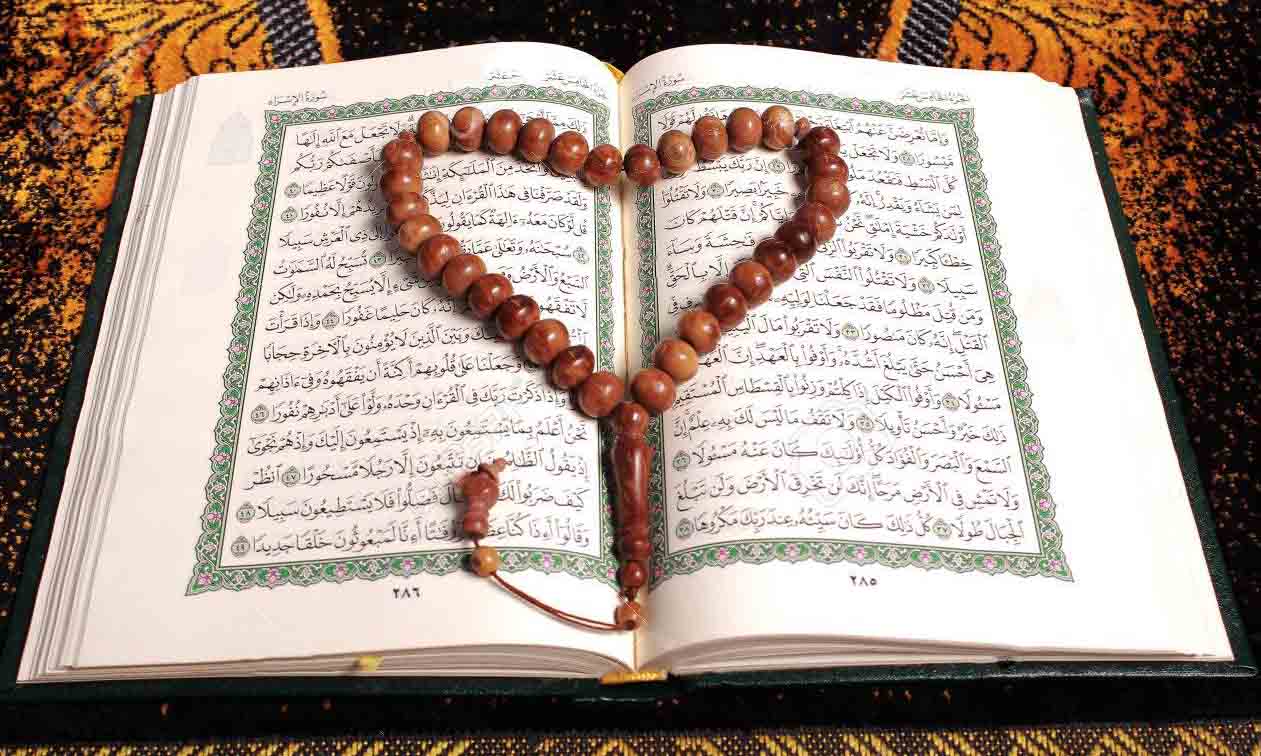
- Use a mushaf with tajwid markings and a trusted translation alongside it (Saheeh International, Mufti Taqi Usmani, or the Sahih International running on islamtics’ Quran reader).
- Pair every recitation with a brief reflection. One verse + one minute thinking about what it means in your life today is more weighty than ten pages skimmed.
- Make dua before opening the mushaf: “Rabbi zidni ilman” — “O Lord, increase me in knowledge” (Quran 20:114). See our Rabbi Zidni Ilma guide.
Is reading the Quran obligatory for every Muslim?
Reciting some Quran in the five daily prayers is obligatory — every prayer requires Surah al-Fatihah. Reading beyond that is strongly encouraged but not strictly fard. The Prophet ⍔ said the best of you are those who learn the Quran and teach it (Sahih al-Bukhari 5027), and Allah commands believers to recite what is easy from it (Quran 73:20). Daily engagement, even one page, is the established practice of the Sahabah.
How many rewards do you get for reading the Quran?
The Prophet ⍔ said: ‘Whoever recites a letter from the Book of Allah will receive one good deed, and one good deed is multiplied by ten. I do not say Alif-Lam-Mim is one letter — Alif is a letter, Lam is a letter, and Mim is a letter’ (Jami at-Tirmidhi 2910). Reading even a single verse yields dozens of rewards, multiplying further in Ramadan.
Can you read the Quran in English instead of Arabic?
You can read translations to understand the meaning, and this is rewarded as study and reflection. However, the ritual reward of reciting ‘every letter’ applies to the original Arabic — translations are interpretations, not the Quran itself. Best practice: read Arabic for recitation reward, then read a trusted English translation alongside it for comprehension. Both together give you reward and understanding.
What are the benefits of reading the Quran daily?
Daily Quran reading produces compounded spiritual, mental, and social benefits: continuous letter-by-letter rewards, lower anxiety through divine remembrance (Quran 13:28), stronger Arabic literacy, family modelling for children, and a heart that softens to Allah’s words. Even ten minutes daily — roughly one page — completes the entire mushaf in about 18 months.
Will the Quran really intercede for me on the Day of Judgment?
Yes. The Prophet ⍔ said: ‘Recite the Quran, for on the Day of Resurrection it will come as an intercessor for its companions’ (Sahih Muslim 804). He also said al-Baqarah and Aal Imran will come as two clouds shading their reciter. Intercession is for those who internalised the Quran through consistent recitation, reflection, and acting on its commands.
Where should a beginner start with reading the Quran?
Start with Surah al-Fatihah — you already recite it in every prayer, so deepen your understanding of it first. Then move to short surahs (al-Ikhlas, an-Nas, al-Falaq) you’ve memorised. Use a mushaf with tajwid markings and a trusted translation. Aim for one page daily before increasing. Pair recitation with a brief reflection — meaning matters as much as letters.
The Quran is not a book you finish — it is a relationship you build. Pick up the mushaf today, open Surah Al-Fatihah, recite slowly, and let one verse change one part of your life. Repeat tomorrow. Repeat for the rest of your life. Rabbana taqabbal minna.
Many readers say Sadaqallahul Azim after closing the mushaf. The phrase means “Allah, the Most Great, has spoken the truth”; our guide explains its Quranic origin and the scholarly disagreement over treating it as a fixed closing formula.